Offshore Wind Turbine Medical: OGUK, GWO and What You Actually Need
Offshore wind uses two overlapping medical standards. Here is how the OEUK and GWO medicals relate and which one your employer is likely to want.
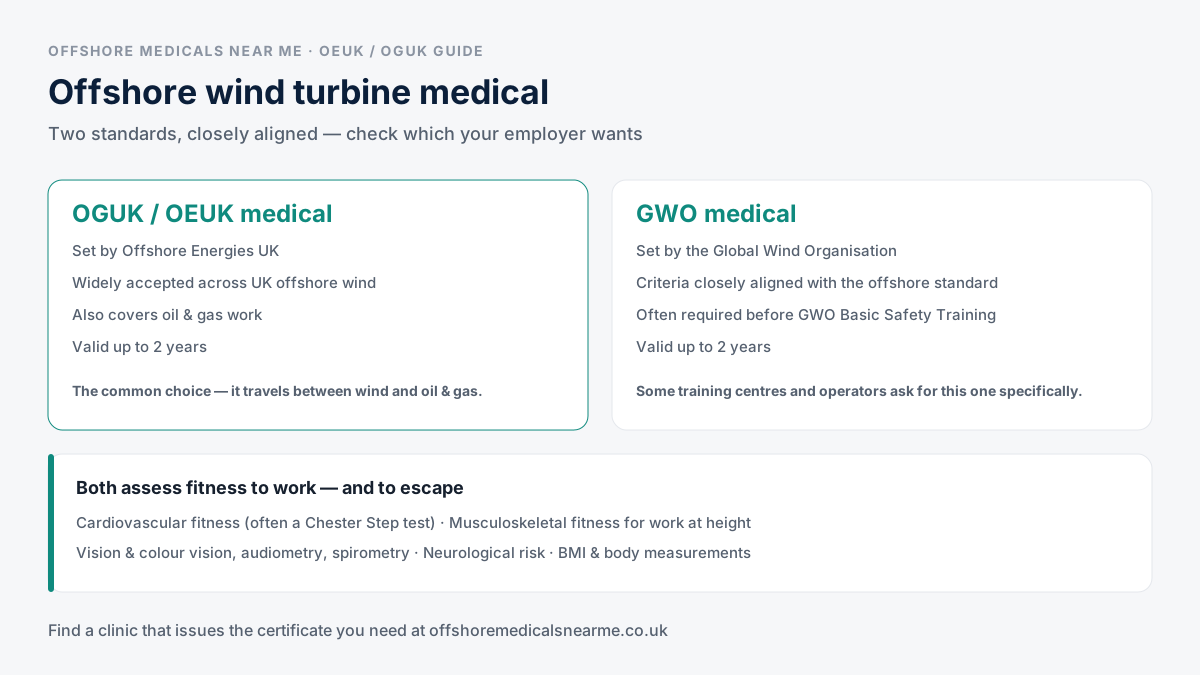
- Offshore wind work in the UK generally requires either an OGUK / OEUK medical or a GWO (Global Wind Organisation) medical; some employers accept either.
- The GWO medical criteria are closely aligned with the OEUK offshore medical standard, so the examinations cover very similar ground.
- Both assess fitness to do the work and to self-rescue — escape from height, from a nacelle, and from a remote location with limited medical support.
- Both are typically valid for a maximum of 2 years, with a shorter certificate possible if a health condition needs review.
- The OEUK medical is widely accepted across UK offshore wind, which is why many technicians hold it rather than, or as well as, the GWO medical.
- A working-at-height and confined-space element means musculoskeletal fitness and the absence of conditions such as uncontrolled epilepsy or blackouts are assessed closely.
- GWO basic safety training (BST) has its own fitness requirement that the medical supports.
Two standards, a lot of overlap
The OEUK medical (still often "OGUK medical") comes from the oil and gas industry and now covers offshore energy generally, including wind. The GWO medical comes from the Global Wind Organisation, the training-standards body for the wind sector. GWO built its medical requirement closely around the established offshore standard, so in practice the two examinations assess very similar things.
What both medicals check
- Cardiovascular fitness — blood pressure, heart, and often a Chester Step aerobic test, because you may have to climb a tower or evacuate under your own power.
- Musculoskeletal fitness — you work at height in a harness, in confined spaces, and may need to lift or drag a casualty.
- Vision and colour vision, audiometry and spirometry.
- Neurological risk — conditions that cause blackouts or seizures are assessed closely because of the working-at-height element.
- BMI and body measurements — for harness fit, hatch access and, where helicopter transfer is used, escape.
- Medication and mental health — anything that could impair you on a turbine hours from shore.
The process is the same as a standard offshore medical — see what to expect on the day.
Which one do you need?
It depends on the employer, the wind farm operator and the training provider:
- Many UK offshore wind employers accept the OEUK medical, which is why it is the common choice — it also travels well if you move between wind and oil and gas.
- Some training centres require a GWO medical specifically before you start GWO Basic Safety Training.
- Some operators accept either. A minority want their own occupational-health assessment on top.
The safe move is to ask your employer or agency exactly which certificate they want before you book, then choose a clinic that issues it. Some clinics issue a wind-turbine eligibility or fit-to-train certificate alongside the medical.
Validity and renewal
Both are normally valid for up to two years, shorter if a condition needs review. The renewal advice is the same as for any offshore medical — book 4–8 weeks before expiry so a re-check does not cost you a mobilisation.
Book an offshore wind medical near you
Compare clinics that carry out OEUK offshore medicals — including those offering wind-turbine eligibility certification — with live appointment availability, and book online.
Find an offshore wind / OEUK medical near you Enter your postcode and compare real, live appointment times at MCA-approved clinics — book online in a couple of minutes. Find a clinic →