How Long Does an OGUK / OEUK Medical Last? Validity & Renewal
The OEUK certificate validity rules in one place — including the situations where yours runs for less than the full two years.
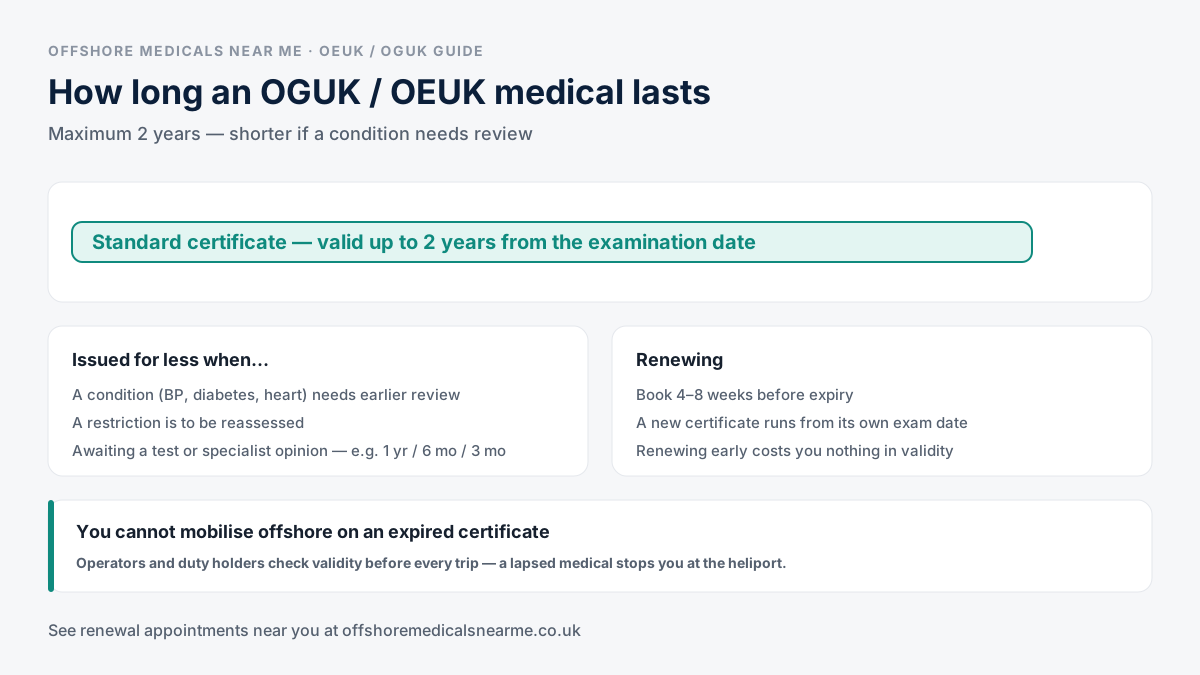
- A standard OGUK / OEUK medical certificate is valid for a maximum of 2 years from the date of examination.
- The examining doctor can issue a shorter certificate — for example 1 year, 6 months or 3 months — if a health condition or a restriction needs earlier review.
- You cannot mobilise offshore on an expired certificate; operators check validity before every trip.
- Renewing before expiry does not shorten the new certificate — it runs from its own examination date, so renewing 4 to 8 weeks early is recommended.
- If your health changes significantly between medicals, you are expected to declare it, and your fitness may be reviewed before the certificate expires.
- A UK OEUK certificate is widely recognised across the international offshore energy sector, but always confirm what a specific operator or country requires.
The standard validity
- Maximum 2 years from the date of the examination, not the date you receive the certificate.
- There is no separate shorter period for younger workers as there is with the ENG1 — the offshore workforce is adult.
When it is issued for less than 2 years
An OEUK-registered doctor can issue a shorter certificate if:
- you have a condition — blood pressure, diabetes, a heart or mental-health condition — that is stable but needs review sooner;
- you have a restriction the doctor wants to reassess;
- you are awaiting a further test or a specialist opinion;
- a borderline result (for example lung function or hearing) warrants a closer eye.
The certificate states the expiry date and any restriction.
When to renew
Book your next OEUK medical 4–8 weeks before expiry:
- Offshore-medical clinics in hubs like Aberdeen get booked up, especially at the start of the year.
- If something needs a re-check or a GP letter, you want time to sort it before your next mobilisation.
- A new certificate issued before the old one expires runs from its own examination date, so you lose nothing by renewing early.
What happens if it expires
You cannot travel offshore on an expired certificate — operators and duty holders check it before every trip, and an out-of-date medical will stop you at the heliport. If it lapses while you are onshore, you simply book a fresh examination. If it is close to expiring while you are offshore, your employer is responsible for arranging a renewal, but most will not let you mobilise with only a few weeks left on it.
Changing employer or working abroad
A UK OEUK certificate is widely accepted across the international offshore energy sector. Some countries and some operators require their own medical or an additional assessment, so confirm with your employer or agency before you travel. If you also crew a vessel, check whether you need a current ENG1 as well.
Renew your OGUK / OEUK medical — see appointments near you Enter your postcode and compare real, live appointment times at MCA-approved clinics — book online in a couple of minutes. Find a clinic →