OGUK / OEUK Medical: What to Expect on the Day (and How to Prepare)
Know exactly what happens at an OEUK offshore medical so you turn up prepared and give yourself the best chance of a clean pass.
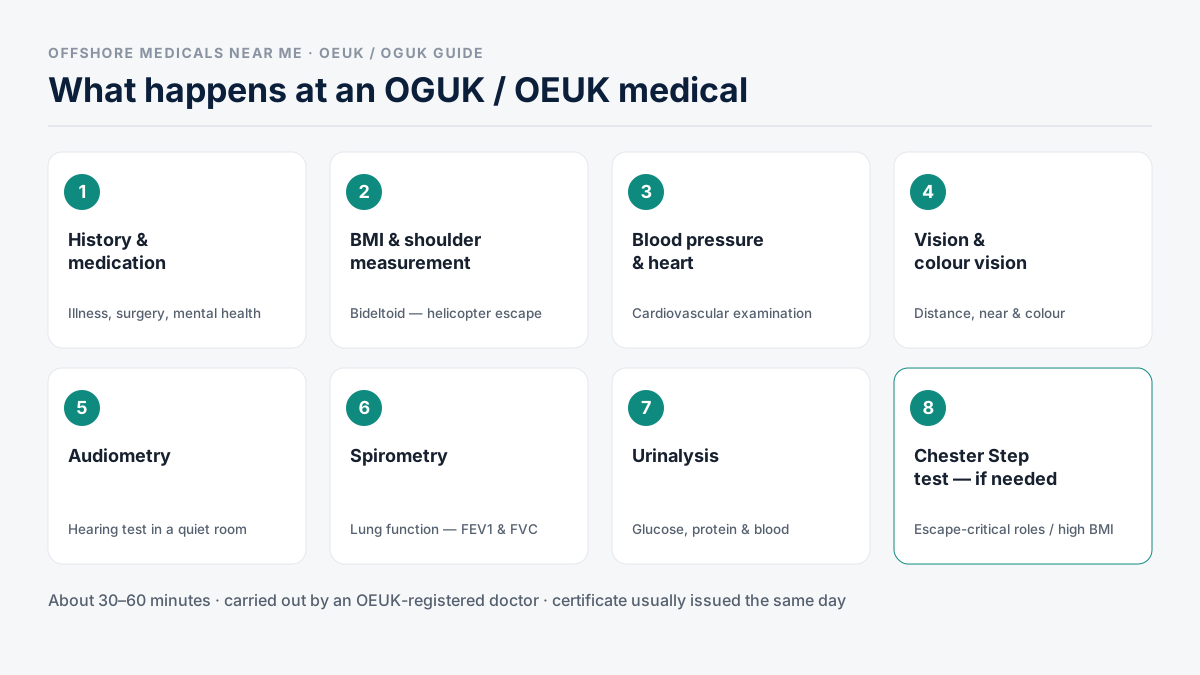
- An OGUK / OEUK medical takes about 30 to 60 minutes with an OEUK-registered doctor.
- Bring photo ID, your previous OEUK certificate, your glasses or contact lenses, a list of medication, and any GP or specialist letters for managed conditions.
- Avoid alcohol for 24 hours and loud noise for at least 16 hours beforehand, as both affect test results.
- The assessment covers medical history, BMI and a bideltoid shoulder measurement, blood pressure, vision and colour vision, audiometry, spirometry and urinalysis.
- A Chester Step test is added for emergency-response and escape-critical roles, and often where BMI is over about 30.
- A bideltoid (across-the-shoulders) measurement is taken because it determines whether you fit through a helicopter push-out window.
- A candidate certified fit is normally given the certificate the same day.
Before the day: how to prepare
- Avoid alcohol for 24 hours and go easy on caffeine — both raise blood pressure and can affect urine and blood-sugar results.
- Avoid loud noise for at least 16 hours — a noisy shift, a concert or loud headphones can temporarily shift your hearing and skew the audiogram.
- Don't do strenuous exercise immediately before — it affects blood pressure and the Chester Step result.
- If you get "white-coat" high blood pressure, bring a recent normal reading from your GP or a home monitor.
- Wear or bring your glasses; if you wear contact lenses, bring the glasses too.
What to bring
- Photo ID — passport, photocard driving licence or national ID card.
- Your previous OEUK / OGUK certificate if you have held one.
- A list of medication and details of any hospital admissions, surgery or ongoing conditions since your last medical.
- GP or specialist letters for anything well managed — asthma, diabetes, a heart condition, a mental-health history.
- Comfortable clothing and trainers in case a Chester Step test is needed.
The assessment, step by step
1. Paperwork and medical history
You complete a health questionnaire and the doctor goes through your history — illnesses, operations, medication, alcohol and drug use, mental health. Be straight with them: an undisclosed condition that causes a problem offshore is far worse than one assessed properly now.
2. Biometrics and shoulder measurement
Height, weight and BMI, plus a bideltoid measurement across your shoulders. This is not about appearance — it determines whether you can fit through a helicopter emergency push-out window, and it feeds the EBS / helicopter-escape confirmation.
3. Blood pressure and cardiovascular check
Blood pressure and pulse, and the doctor listens to your heart and lungs. A high reading can be re-checked later in the appointment.
4. Vision
Distance vision, near vision and a colour-vision test. Corrected vision counts, so wear your glasses or lenses. Safety-critical roles such as crane operator and banksman have a stricter colour-vision standard.
5. Audiometry
A hearing test in a quiet room across a range of frequencies. This is why the 16-hour noise rule matters.
6. Spirometry
You blow hard into a tube to measure lung function (FEV1 and FVC). The doctor may ask for two or three attempts to get a consistent result.
7. Urinalysis
A dipstick check for glucose, protein and blood — a quick screen of kidney function and diabetes risk.
8. Chester Step test (only if needed)
If your role requires fitness for emergency escape or response, or your BMI is raised, you step on and off a low step to a set rhythm from an audio track while your heart rate is monitored. It takes a few minutes and gets gradually faster.
BMI, blood pressure and hearing: the common sticking points
- BMI — a raised BMI usually means a Chester Step test rather than an automatic fail, but a very high BMI can lead to a restricted certificate or a deferral until it is addressed, partly because of survival-suit fit and escape.
- Blood pressure — one high reading rarely fails you; the doctor can re-check, and a recent normal reading from home helps.
- Hearing — noise-induced loss is common offshore; a degree of loss can still be certified, sometimes with a hearing-protection restriction.
Fit, restricted or unfit
A clean pass means "fit for offshore work", with the certificate issued the same day and valid up to two years. A restricted certificate limits certain duties or shortens the validity. "Temporarily unfit" means a fixable issue needs sorting first. A permanent "unfit" outcome is rare and can be reviewed by an independent medical adviser.
Book your OGUK / OEUK medical with a registered doctor near you Enter your postcode and compare real, live appointment times at MCA-approved clinics — book online in a couple of minutes. Find a clinic →